
This post may contain affiliate links, which means I may receive a small commission, at no cost to you, if you make a purchase through a link.
A grazing table is not a bigger charcuterie board. It is a different thing, and the reason most attempts look underwhelming is that people build one like the other. A board is arranged and admired. A grazing table has to survive two hours of twenty people picking at it, which means it needs height, it needs refilling, and it needs to still look good at nine o'clock. This is how I build one, in the order I do it, and what actually earns its place on the table.
My Top Picks at a Glance
The foundation: a 36-inch acacia board that anchors the whole spread. Shop it here
The thing that makes it look professional: buffet risers at three different heights. Shop it here
The thing that saves your evening: glass prep containers so refills take seconds. Shop it here
Best for keeping a buffet fresh: a chilled serving platter with ice underneath. Shop it here
Best small detail: slate cheese markers so nobody has to ask. Shop it here
Best for the table itself: a paper runner you roll out and throw away. Shop it here
Best value set: six cheese knives for under twenty-five dollars. Shop it here
Build It in Layers, From the Table Up
The order matters, because everything after step one has to sit on top of it. Runner, then risers, then boards and platters, then food, then the small things. Trying to add height once the food is out never works.
Layer One: The Surface
Start with a runner down the middle rather than a cloth over everything. It defines where the food goes, it hides the join if you have pushed two tables together, and a paper one goes straight in the bin at the end, which matters when something inevitably leaks.
Layer Two: Height, and Why It Is Everything
This is the single thing that separates a grazing table from food on a table. Flat food reads as a buffet. Food at three different heights reads as a display. Risers go under boards and platters so some things sit four inches up, some two, some flat on the runner.
A trick if you are short on risers: upturned bowls and cake tins under the runner do exactly the same job and nobody can see them. The runner hides a multitude of improvised height.
Layer Three: Boards and Platters
One Long Board as the Anchor
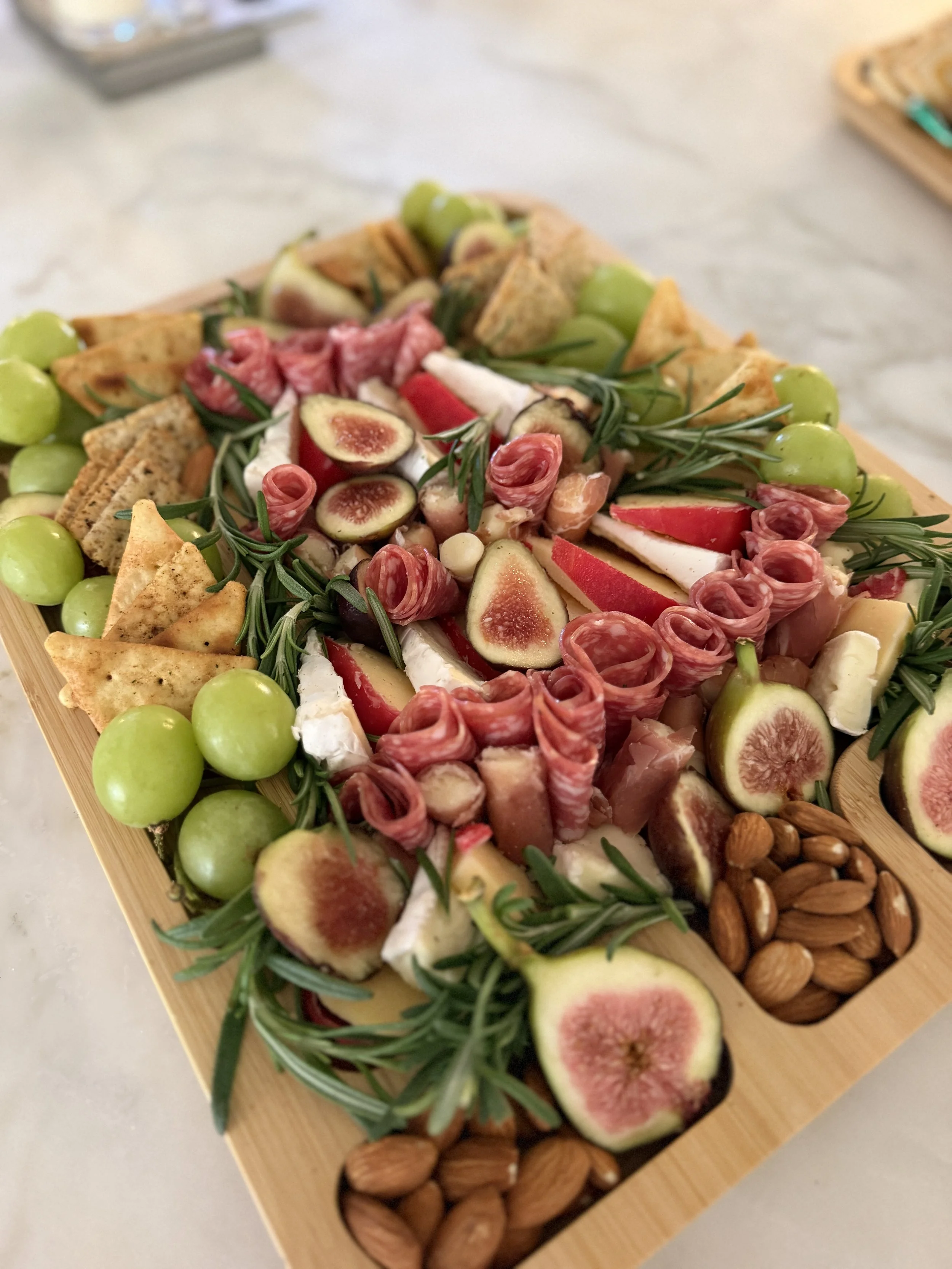
A 36-inch board down the centre gives the table a spine and everything else arranges around it. This is the piece worth spending on, because it comes out for every gathering for years, not just this one.
Shop the 36-inch charcuterie board
A Second Board with Handles
Handles matter more than they sound. A board you can lift fully loaded is a board you can take into the kitchen to refill, rather than one you have to restock in front of everybody while they wait.
Rectangular Platters in Three Sizes
Rectangles tessellate. Round platters leave awkward gaps you then have to fill with something, which is how tables end up looking cluttered rather than abundant. A graduated set of three covers most layouts.
Layer Four: The Food, and How to Place It
Small Bowls Break Up the Run
Olives, nuts, cornichons and anything wet needs its own bowl. Scattered along the length they also create natural stopping points, so people graze along the table instead of forming one queue at the cheese.
Dip Bowls, a Dozen of Them
You need far more than you think. Twelve is about right for a crowd, and having them all match is what makes a table of forty different foods look like one thing.
Tiny Glass Bowls for the Extras
Honey, hot honey, jam, mustard. Glass rather than ceramic so people can see what is in them without having to lean in and guess.
Layer Five: The Small Things That Do the Most Work
Cheese Markers
Slate markers end the single most repeated conversation of the night. They also quietly make the spread feel considered rather than assembled, for under ten dollars.
A Proper Cheese Knife Set
One knife per cheese, otherwise the blue ends up on the brie within four minutes. A six-piece set costs about twenty dollars and is the difference between a spread that holds up and one that turns into a single smeared mess.
Mini Tongs
For anything people should not be picking up with fingers. An eighteen pack means there is one in every bowl rather than one shared tong migrating around the table.
Cocktail Picks
The quiet workhorse. Picks turn loose items into something people can take cleanly, which keeps the table tidy and means nobody is hovering with a napkin.
Shop the bamboo cocktail picks
A Gold Accessory Set
Small spreaders, forks and spoons in one finish. Mixed metals across a long table look accidental; one finish repeated down the length looks deliberate.
Keeping It Fresh for Two Hours
This is the part almost nobody plans for, and it is the thing that actually decides whether a grazing table still looks good when the last guests arrive.
Prep Containers Are the Real Secret
Everything gets cut, portioned and refrigerated the day before in clear containers. Refilling then takes ten seconds and happens three times across the evening, rather than the table slowly emptying into gaps. Glass so you can see what is left without opening six lids.
Shop the glass prep containers
A Chilled Serving Platter
For anything dairy or meat that is going to sit out. Ice goes in the base, the tray sits on top, and the food stays genuinely cold for hours without a bowl of melting ice anywhere in sight.
Shop the chilled serving platter
Mesh Food Domes
Essential if any part of the spread is outdoors or near a door, and useful indoors for covering things between the setup and the start. They also let you build the table two hours early, which is the real gift to yourself.
How Much Food Do You Actually Need?
As a Starter: 3 to 4 Ounces of Cheese Per Person
If the grazing table is the appetizer before a meal, three to four ounces of cheese and about the same of charcuterie per person is right. Double both if it is the meal.
Five Cheeses, Maximum
Something hard, something soft, something blue, something sharp and one wildcard. More than five and people stop tasting and start grazing past them, and you have spent money for nothing.
Fill the Gaps With the Cheap Things
Crackers, nuts, grapes and dried fruit are what create the look of abundance, and they cost almost nothing. Build the structure with the expensive items and fill every remaining gap with these.
Build It Two Hours Early
Everything except the crackers and anything that browns can go out early, covered. A table built in a rush looks like it, and you will be glad of the two hours.
Frequently Asked Questions
What is the difference between a charcuterie board and a grazing table?
Scale and structure. A board is one surface, arranged once. A grazing table runs the length of a table, uses risers to create height, and is designed to be refilled over several hours rather than admired and then demolished.
How do I keep a grazing table fresh for hours?
Prep and portion everything into containers the day before so refills take seconds, use a chilled serving platter with ice underneath for dairy and meat, and keep mesh domes over anything that is sitting out. Refill three times rather than putting everything out at once.
How much food do I need for a grazing table?
Three to four ounces of cheese per person if it is an appetizer, double that if it is the meal. Five cheeses maximum, and fill the gaps with crackers, grapes, nuts and dried fruit, which is what creates the look of abundance cheaply.
How do I make a grazing table look professional?
Height is the whole answer. Put risers under some boards so food sits at three different levels, keep all your serving accessories in one metal finish, and use a runner to define the area rather than spreading food across the whole table.
What should I put on a grazing table besides cheese?
Charcuterie, crackers and sliced baguette, grapes and other fresh fruit, dried fruit, nuts, olives, cornichons, honey or hot honey, and a couple of dips. The small wet things go in bowls, which also breaks up the run and keeps people moving along the table.
More Hosting Posts
How to Set a Beautiful Table Your Guests Will Remember
Hosting Essentials: The Amazon Must-Haves That Make Entertaining Easy
Easy Appetizer Idea for the Holidays
And if you want these roundups as soon as they go up, along with the sales actually worth paying attention to, join the email list below. It is the easiest way to catch the good stuff before it sells out.
