
Fall Entryway Drop Zone: Where the Coats, Boots and Backpacks Actually Go
This post may contain affiliate links, which means I may receive a small commission, at no cost to you, if you make a purchase through a link.
Our back door is fine in July. By the third week of October it is a pile: two backpacks, four jackets that nobody hung up, a pair of cleats, and whatever came in from the car. It is the first thing I see when I walk in and it sets the tone for the whole house.
The fix is not more storage. It is giving every category exactly one place to land, at the height of the person who has to use it. Here is what finally worked at our house.
My Top Picks at a Glance
Best hooks: extra sticky adhesive coat and towel hooks. Shop it here
Best baskets: small wicker baskets, 3 pack. Shop it here
Best bench: upholstered 64 inch bench. Shop it here
Best mirror: scalloped round wall mirror. Shop it here
Best catch-all: wicker scalloped tray. Shop it here
Rule One: Hooks Beat Hangers, Always
Nobody hangs a coat on a hanger when they are walking in with an armload. They will use a hook. Put them at the height of the shortest person who needs one, which is lower than you think, and add twice as many as you believe you need.
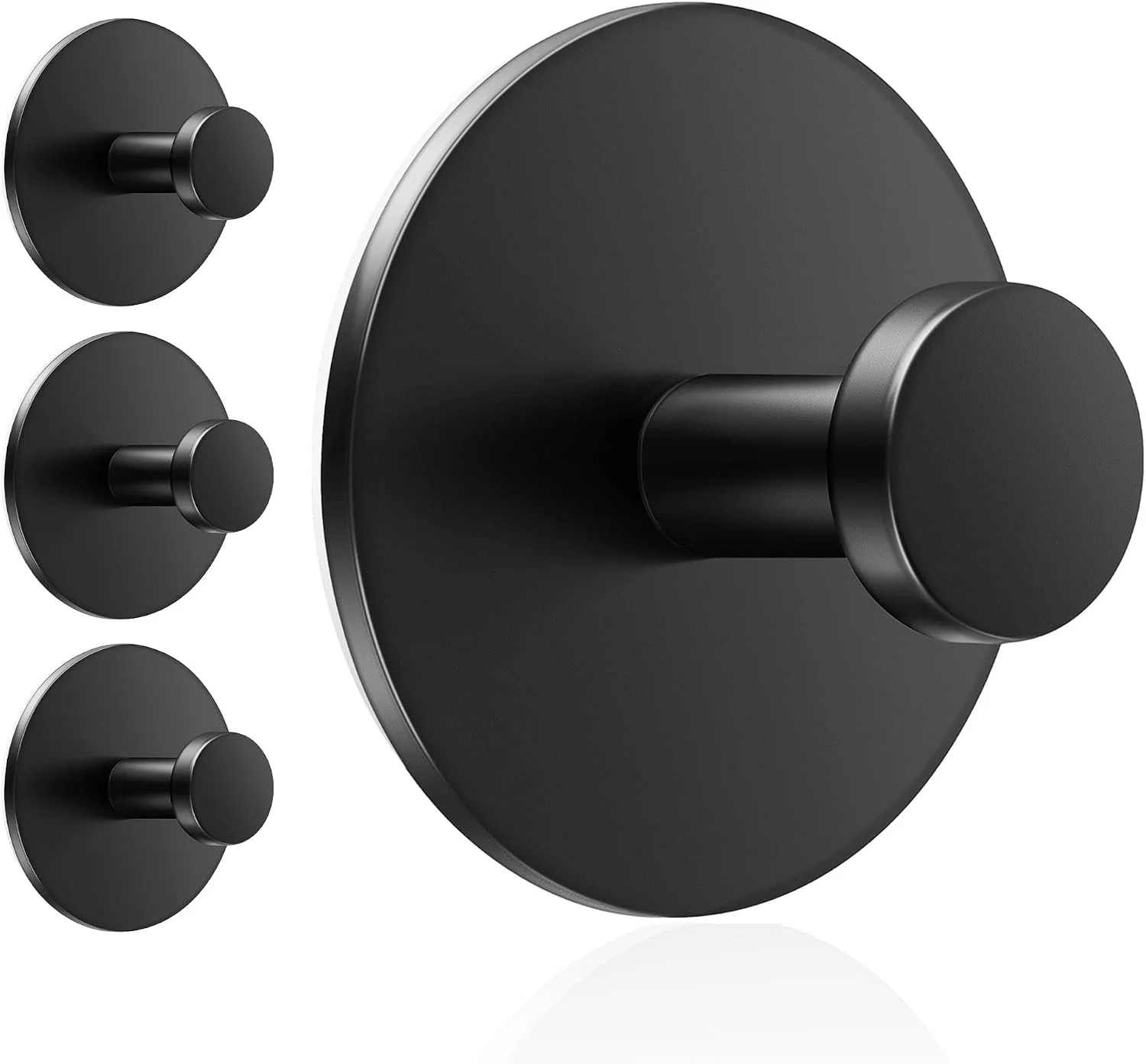
Extra Sticky Adhesive Coat and Towel Hooks
Twelve pound hold, no drilling, and they come off without pulling paint. This is the pick if you rent or if you want to test hook placement before you commit to holes in the wall.
White Adhesive Wall Hooks
Same idea in white, which disappears against most trim. Buy the multipack and put four in the entry, two in the mudroom and two in each kid's room.
Reusable Self Adhesive Robe Hooks
Reusable, which means you can move them when you realize you put them six inches too high. I did.
Rule Two: One Basket Per Person
A shared bin becomes a pit. One basket per person, labeled or just understood, and the rule is that whatever is in the entry at bedtime goes into your basket. It is the only system that has survived more than a month here.
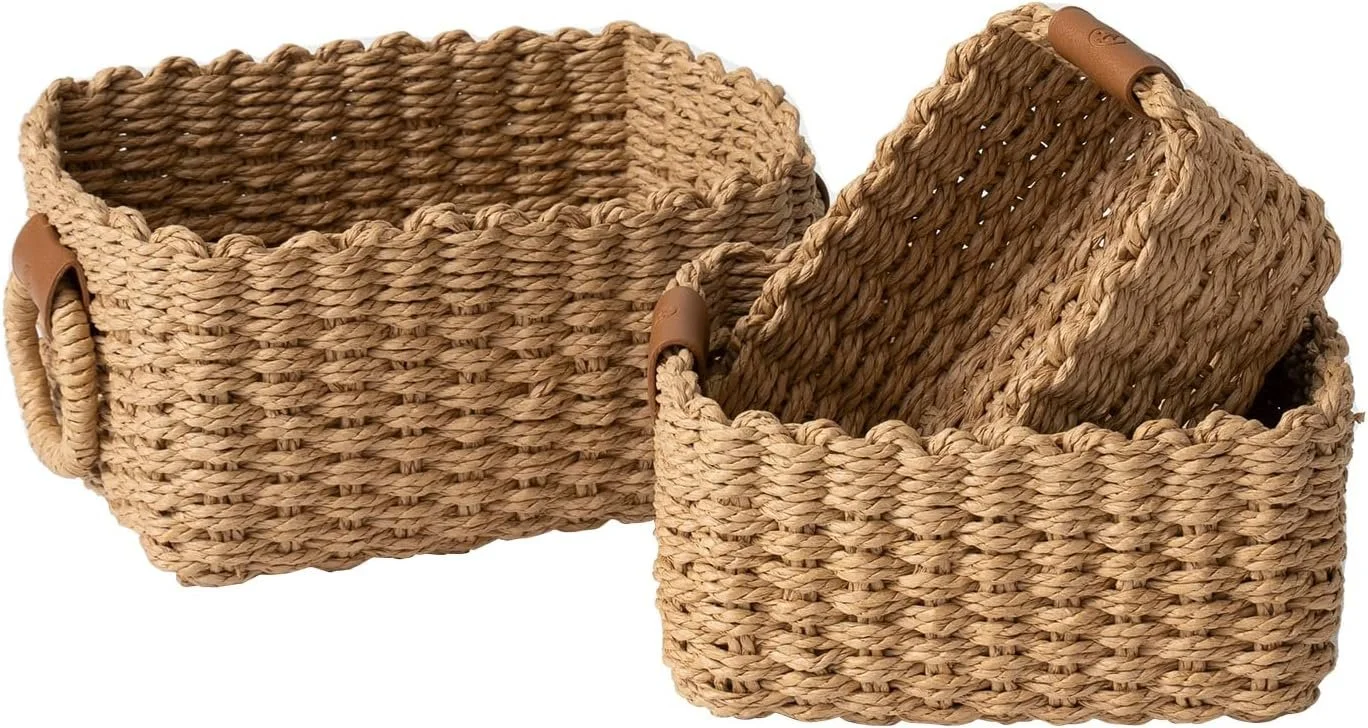
Small Wicker Baskets, 3 Pack
Three baskets, natural woven, small enough that they cannot become a black hole. That size limit is a feature, not a compromise.
Large Ceramic Basket Bowl
For keys, sunglasses, and the things that should never go in a basket you carry upstairs. Heavy enough that it does not slide when someone tosses keys at it.
Rule Three: Somewhere to Sit
Boots come off standing up until about age nine and after about age forty. A bench is the piece that turns a hallway into a functioning entry, and the storage underneath it is where the boots live.
Upholstered Bench, 64 Inch
Long enough for two people, hardwood frame, and the open space underneath takes a full row of boots or two baskets. Upholstered rather than wood because nobody sits on a wood bench twice.
Rule Four: A Mirror Makes It a Room
An entry with a mirror reads as a designed space. An entry without one reads as a hallway you store coats in. It also bounces light into what is usually the darkest spot in the house, and it is the last thing you check before you walk out the door.
Scalloped Round Wall Mirror, 32 Inch
Thirty two inches, scalloped edge, light enough to hang on a single anchor. The shape keeps it from feeling like a bathroom mirror.
Rule Five: One Tray Catches Everything Else
There is always a category you did not plan for. Mail, a charger, the thing that came out of somebody's pocket. A tray contains it and, more importantly, makes it obvious when it needs clearing out.
Wicker Scalloped Tray With Handles
Handles mean you can pick the whole mess up and carry it somewhere else when people are coming over, which is the real use case.
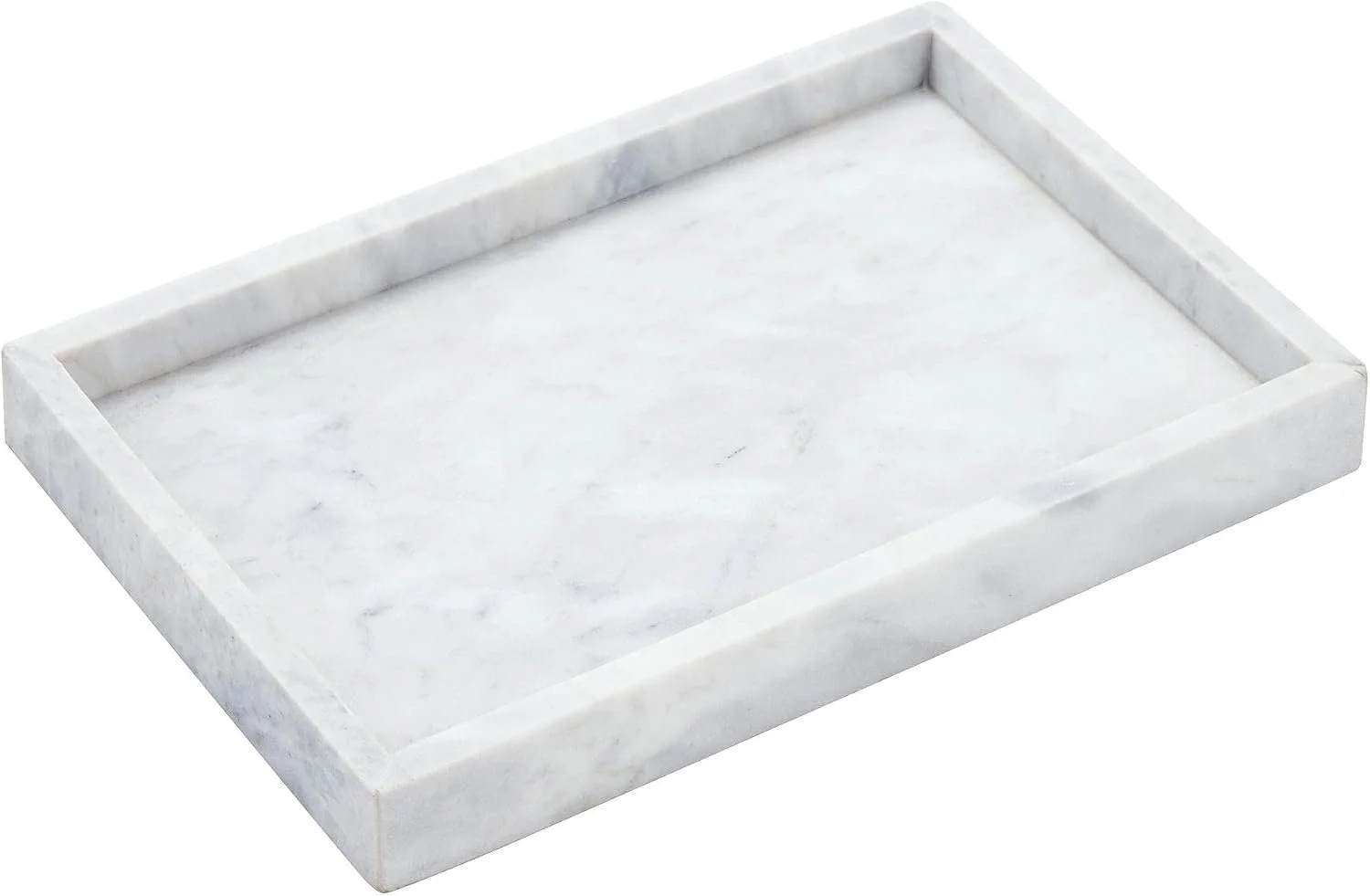
Marble Vanity Tray
The dressier version for a front entry console rather than a back door. Marble is heavy and it stays put.
Rattan Fruit Tray and Bread Basket
Shallow woven tray that works for gloves and hats piled in. Doubles as a serving piece the rest of the year, which is how I justify most things.
Three Things I Learned the Hard Way
Put the boot tray on the floor before you buy anything else and see where people actually drop shoes for a week. It is almost never where you planned to put it.
Hooks at two heights, not one. Adult coats at fifty eight inches, kid coats at forty. One row at a compromise height means neither person uses it.
Leave one hook empty. Every system fails the day somebody comes over with a coat and there is nowhere to put it, and then it never recovers.
Fall Entryway FAQ
What do you need in a mudroom or entryway?
Hooks, a place to sit, a boot tray, one basket per person, and a tray for small things. In that order of importance.
How high should entryway hooks be?
Fifty five to sixty inches for adults, thirty six to forty two for kids. Two rows is better than one row at an average height.
How do you keep an entryway from getting cluttered?
Limit the container sizes. A small basket per person forces a daily reset; a big shared bin lets things accumulate for a month.
What do you do if you do not have a mudroom?
Build the same system vertically on one wall by the door. Hooks, a narrow bench or a stool, a tray on the wall above. It takes about fourteen inches of depth.
What goes under an entryway bench?
Boots in a tray in winter, two baskets the rest of the year. Keep it to one layer so people can actually see what is there.
More Organizing Around Here
Let's Get Organized Shop it here
Amazon Storage and Organization Inspo Shop it here
Get Organized for School: A Mom's Guide Shop it here
Join the email list for the finds before they go up here.
